
2 February 2026
/ 15:00
- 17:00
CET
EPIC Online Technology Meeting on Photonics for Cultural Heritage
Online Event
Photonics provides revolutionary tools for the preservation, analysis, and understanding of cultural heritage. Through non-invasive techniques like laser scanning, hyperspectral imaging, and optical coherence tomography, we can meticulously document artifacts, reveal hidden details, analyze material composition, and monitor degradation without causing damage. These advancements enhance conservation efforts, facilitate accurate restoration, and deepen our appreciation of historical treasures.
In this online event, we’ll explore the latest developments in photonics for cultural heritage, discuss key challenges, and engage with experts on the future of conservation and archaeological research.
Join us to discover how photonics is shaping the next era of cultural heritage preservation and exploration!
Agenda
Speakers

CEO and Founder
at Matis

Technical Sales Engineer
at NIREOS

Professor of Colour Imaging and Founder and CEO of Spektralion AS
at NTNU

After receiving his degree in electrical engineering in 1960 in West-Berlin, Nitin Shankar worked in product development (AEG, Berlin), manufacturing (IBM, India), management consulting (Nitin Shankar Associates), project management (Machine Sazi, Iran) and sales (TESA, Switzerland). Retired since 2004, his consulting relationship with Synova SA, a Swiss company manufacturing laser machines, started in 2010 when the company sold their first systems to the diamond industry in Surat (India). His experience inspired him to write a book titled ‘The Synergy of Light and Water’
Special Advisor in the Diamond Business
at Synova

Dr. John Gilchrist is an applied physicist specialising in time-resolved and steady-state optical spectroscopy since completing his PhD research at the University of Strathclyde. He was the first spectroscopy engineer at Edinburgh Instruments, playing a key role in the technical and commercial development of its time-resolved spectroscopy business. He later served as Director of Optical Spectroscopy and Director of Custom Diffraction Gratings at Horiba Jobin Yvon. For over 20 years, John has led ClydeHSI as Managing Director, focusing on hyperspectral imaging for complex measurement applications, including cultural heritage science. He is a regular scientific contributor and led the IEEE P4001 standards work that resulted in the standard being published in October 2025.
Managing Director
at Clyde HSI

Managing Director
at HIROX

Ali Kamalabadi has a master degree in Mechatronics with 7 years of experience in spectral imaging systems development. He attended and completed some EU projects and he talks English, Portugues and Persian
Ali Kamalabadi
COO
at Xpectraltek
Attendees
- Alexander Telle , CEO at ACM Coatings
- Ali Kalamabadi, COO at XpectralTEK
- Andrea Trapanotto , Graphic Designer at Alite
- Angeles Camacho , Head of Research and Stretegic Partnership at Coractive
- Antonio Cardoso , CEO at XpectralTEK
- Antonio Raspa , Laser & Lidar Product Manager at Luxinar
- Bertrand Thomas, Engineer at Universite Bordeaux / CNRS
- Caroline Field , Marketing Specialist at Bay Photonics
- Chiara Bellezza , PhD student at Politecnico di Torino
- Chiara Damato, PhD candidate at Politecnico di Milano
- Diana Filipa Guimar?es, Dr. at INESC TEC
- Dieter Bingemann , Application Scientist at Wasatch Photonics
- Doyinsola Sonoiki, PhD student at Technical University of Denmark
- Emilien Leonhardt, Managing Director at Hirox
- George Williams , CEO at nanovox
- Georgios Magkanas, Postdoctoral Researcher at ICFO
- Giulia Chiecchio Richard, Student at Institut d'Optique Graduate School
- John Gilchrist, CEO at Clyde HSI
- John Sharp , Innovation Manager at Helia Photonics
- Jon Danskin, Sales Engineer at ClydeHSI
- Jon Willmott , Professor at University of Sheffield
- Jon Yngve Hardeberg, Professor at the Department of Computer Science at NTNU
- Jorg Hermsdorf , Head of Department at Laser Zentrum Hannover
- Julia Sawko , Technical Sales Manager at SMARTTECH3D METROLOGY
- Kazushige Furudate, Engineer at JX Advanced Metals Corporation
- Kevin Contreras , R&D Manager at V-OPTICS
- Kevin Yao , dir at Analog Devices
- Konstantinas Zakalskis , Head of Growth at SPhotonix
- Maite Maguregui, Asssociate Professor at University of the Basque Country
- Marc Juarez , Innovation Director at Seoul Semiconductor Europe
- Mariam Alkhateri , Researcher at Technology Innovation Institute
- Marie Didier , CEO at MATIS
- Marta Ghirardello , Technical Sales Engineer at NIREOS
- Martin Thunert , Senior OCT Application Engineer at Thorlabs
- Melanie Leclerc, Optical Designer at INO
- Mike Cox , Photonics Development at Bay Photonics
- Misha Mishechkin , President at OptixLog
- Nick Barnett , Business Development manager at Pro-Lite
- Nicolas Cantale , Senior Project Manager at CSEM
- Nitin Shankar, Special Advisor in the Diamond Business at Synova
- Oliver Pust , Sales Director at Delta Optical Thin Film
- Piotr Rydzek, Owner at Skandalski
- Ramona Molnar , Head of Sales and Marketing at Lightnovo
- Rolando Ferrini , Chief Product Officer at FEMTOprint
- Ruud Niesen , Sales Director at Wasatch Photonics
- Ruud Noord , Sales Specialist at Te Lintelo Systems
- Sarkar Mahbub Akhter, Principle Engineer at Lumentum
- Sebastien Blanc , Chief Technology Officer at MATIS
- Serhat BOYNUKALIN , General Menager at DuyuSense
- Silvia Contessi, University Technical Staff at Alma Mater Studiorum University of Bologna
- Sony George, Professor at NTNU Norway
- Wendy Meulebroeck, Professor at Vrije Universiteit Brussel

Contact Information
Technology Manager
Technology scope and agenda
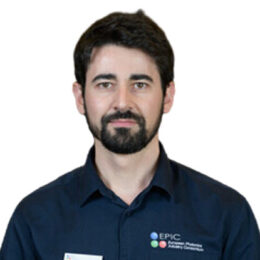
Jeremy Picot-Clemente, PhD
Technology Expert for Optics and Optical Systems
Event Manager
Logistics, venue, accommodation, and transportation

Useful resources
Related
Market Reports
Market Reports


2026


Related
Upcoming Events
Upcoming Events


OnLine

26 October 2026.
Online Event
OnLine

28 October 2026.
Online Event
OnSite

4-5 November 2026.
Bordeaux, France
OnSite

9 November 2026.
Regensburg, Germany
OnLine

9 November 2026.
Online Event

Related
Past Events
OnLine

19 October 2026.
Online Event
Registration Closed
OnSite

13-14 October 2026.
Milan, Italy
Registration Closed
OnLine

12 October 2026.
Online Event
Registration Closed
