
Which photonics jobs got the most attention in the last quarter of 2025?

Photonics companies are hiring across a wide range of roles, but job seekers do not look at all vacancies in the same way.
An analysis of Jobs in Photonics postings and Google Analytics data from September to December 2025 shows a clear pattern: while hiring activity is broad, attention is strongly focused on a smaller set of highly specialised roles.
Photonics companies are hiring across a wide range of roles. But what are job seekers actually clicking on?
Looking at job postings published on Jobs in Photonics between September and December 2025, and comparing them with Google Analytics data from the same period, a clear picture starts to form. Hiring activity is broad, but candidate attention is far more selective, and strongly focused on specialised, hands-on photonics roles.
Where job seekers spend their time
When focusing only on individual job vacancy pages, the roles that attract the highest attention are overwhelmingly technical and specialised, including:
- process engineering
- photonics and optical design
- silicon photonics
- high-speed photonics
- optical testing and validation
- research and advanced development
These roles consistently receive more page views and longer engagement times than more generic vacancies.
What this tells us:
Talent coming to a specialised platform like Jobs in Photonics is not browsing randomly. Visitors are actively searching for deep-tech, hands-on engineering roles, often linked to integrated photonics, semiconductor manufacturing, and advanced optical systems.

What companies publish most often
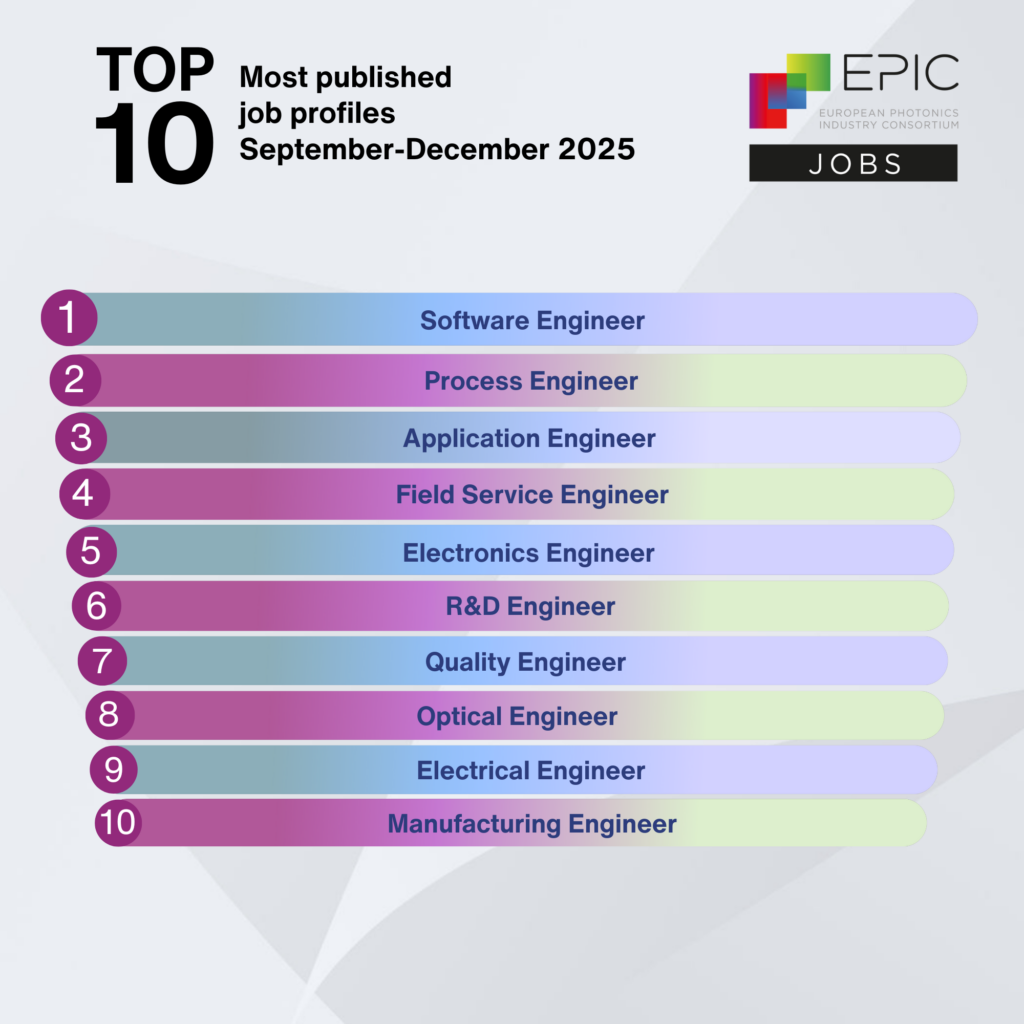
On the job postings, the picture is more diverse. Between September and December 2025, the most frequently published job profiles include profiles include software engineers, process engineers, application engineers, field service engineers, R&D engineers, and a mix of electronics, electrical, mechanical, and manufacturing roles.
This reflects the reality of photonics companies as complex organisations. Beyond optics and lasers, they need people to write software, run production lines, support customers, and manage projects. However, publication volume does not automatically translate into candidate attention.
Where hiring supply and candidate interest align?
There are, however, roles where hiring needs and candidate interest line up very clearly.
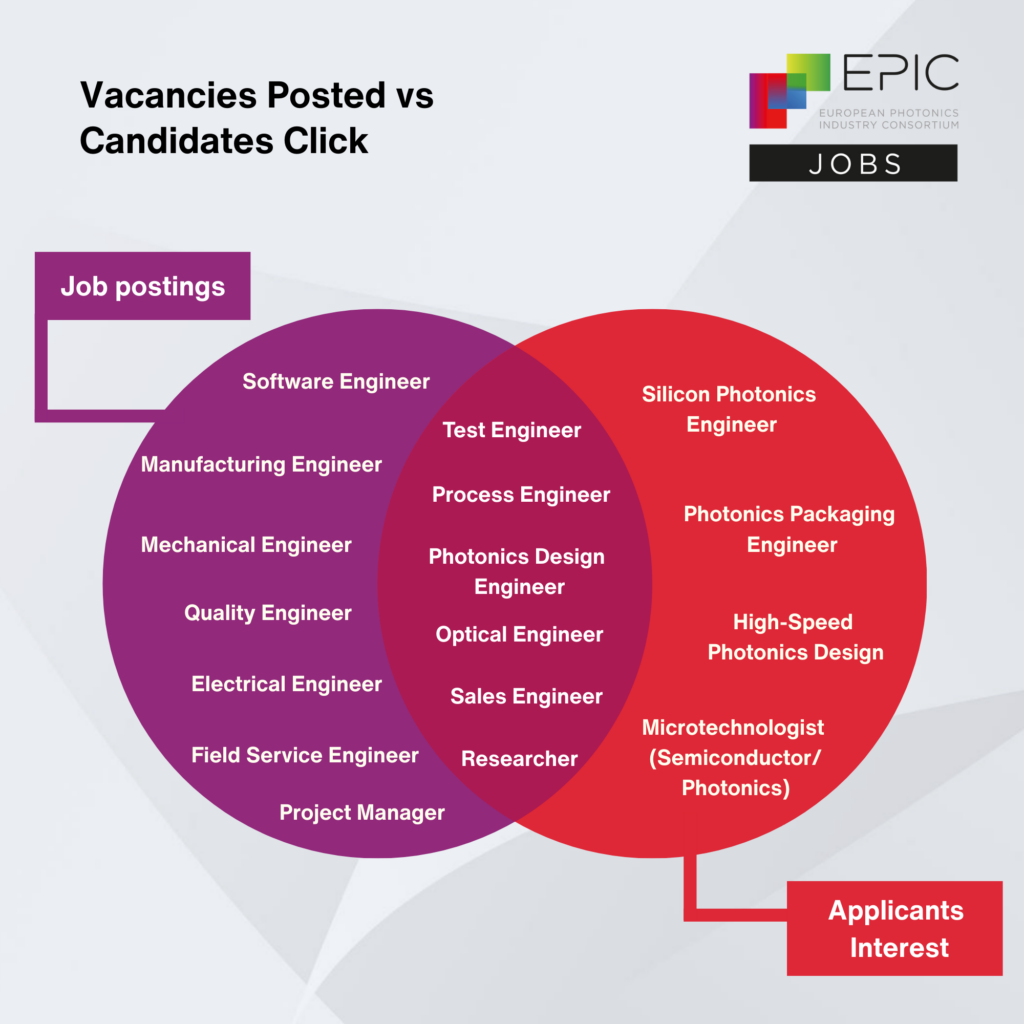
Process engineers, optical and photonics design engineers, test engineers, research roles, and technically oriented sales engineers appear consistently on both sides of the analysis.
These profiles form the working core of the photonics industry. Companies keep hiring for them, and candidates keep searching for them. There is nothing flashy about this result, and that is precisely why it matters.
Where the gaps appear?
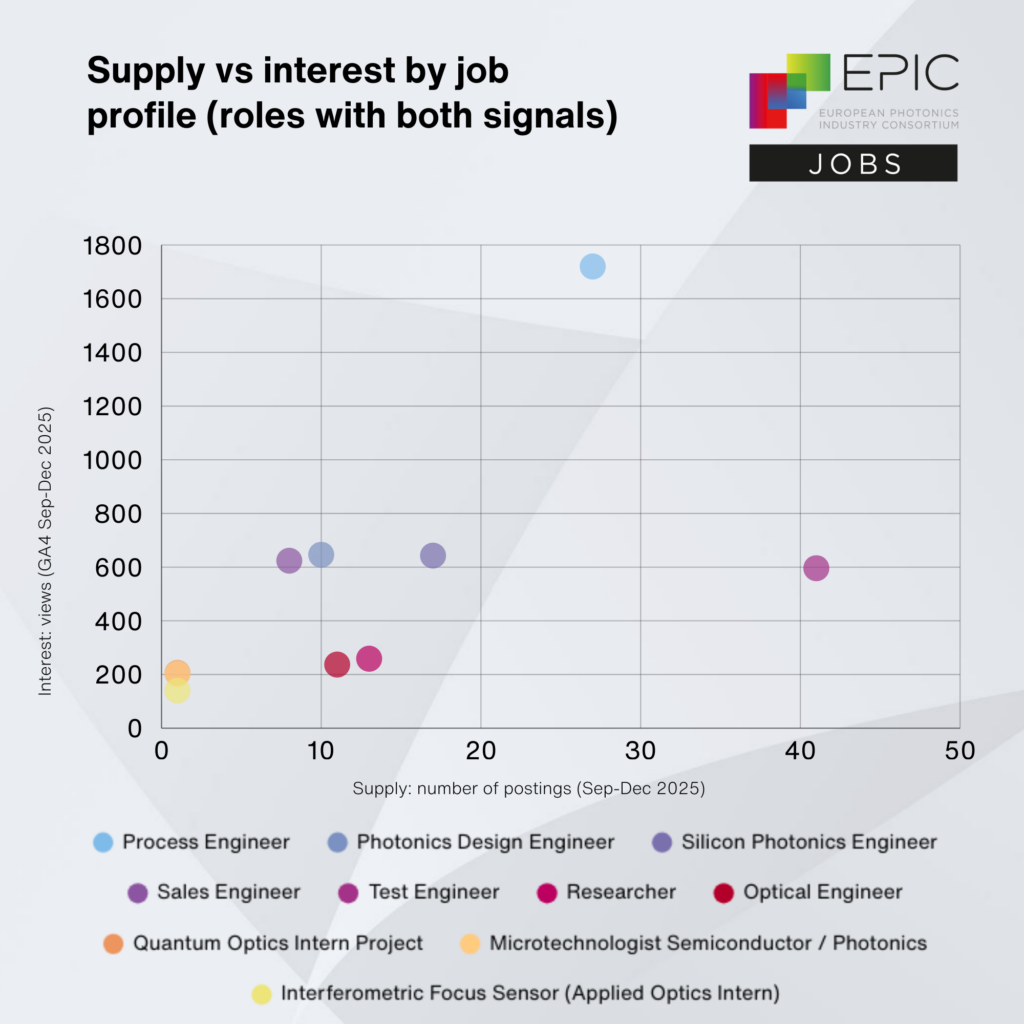
Some roles are posted frequently but attract relatively limited attention on a photonics-focused platform. Generic software or manufacturing roles fall into this category. These positions are essential, but when they are described without a clear photonics angle, they simply blend into the background.
At the same time, a smaller number of highly specialised roles, particularly in silicon photonics and high-speed photonics design, attract a disproportionate amount of interest. Even when only a handful of such positions are published, they draw attention quickly.
This suggests that candidates are actively tracking where the technology is going, not just where the bulk of hiring happens today.
A few practical takeaways
For employers, the message is fairly straightforward: how a role is framed matters. Generic titles tend to underperform on specialised platforms like the Jobs in Photonics. Job descriptions that clearly reference optical systems, PIC design, testing, packaging, or integration tend to resonate more.
For job seekers, the data confirms that roles linked to advanced photonics and semiconductor integration attract strong interest, which also means stronger competition. At the same time, process and test roles remain a reliable entry point into the industry, with steady demand and visibility.
Methodology
This analysis is based on:
- Job postings published on the Jobs in Photonics platform between September and December 2025
- Google Analytics (GA4) “Most visited pages” export for the same period


